Mid-century fashion, vintage pop culture and retro cool... from Expo 67 and beyond.
12 May 2017
The Katimavik Ashtray
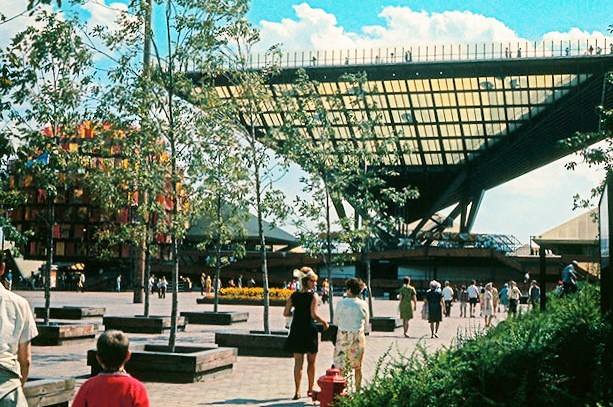
The 'Katimavik' was a 1000-ton structure, with a hollow steel frame.
One of the things I love about Expo 67 anniversary years is the amount of unearthed information and never-seen-before archives that comes to light.
In the early days of this blog, I wrote about one of my favorite Expo 67 anecdotes: the fact that the Canadian pavilion's Katimavik was, in fact, inspired by an ashtray.
A recent cbc.ca article spoke to Caroline Robbie, daughter of Rod Robbie, one of the architects that worked on the Canada pavilion. Her father's firm Ashworth Robbie Vaughan and Williams won the bid for the pavilion's design; after many late nights, and (ahem) lots of cigarettes... From the article:
Robbie and his partners were smoking up a storm one night as they grappled with ways to create a visually impressive vantage point for the pavilion without impeding the flow of foot traffic on the ground below.
The overflowing, four-sided ashtray with its sloping, upside-down pyramid design suddenly caught their eye.
"They started looking at the form of this ashtray on the table, and it was perfect," Caroline says. "It would touch the ground as little as possible and therefore not impede the flow of people around it, but it would also offer the greatest amount of vantage point for those who work their way through the pavilion and up to the top."
"You could look out all the way around that pyramid all over the grounds."
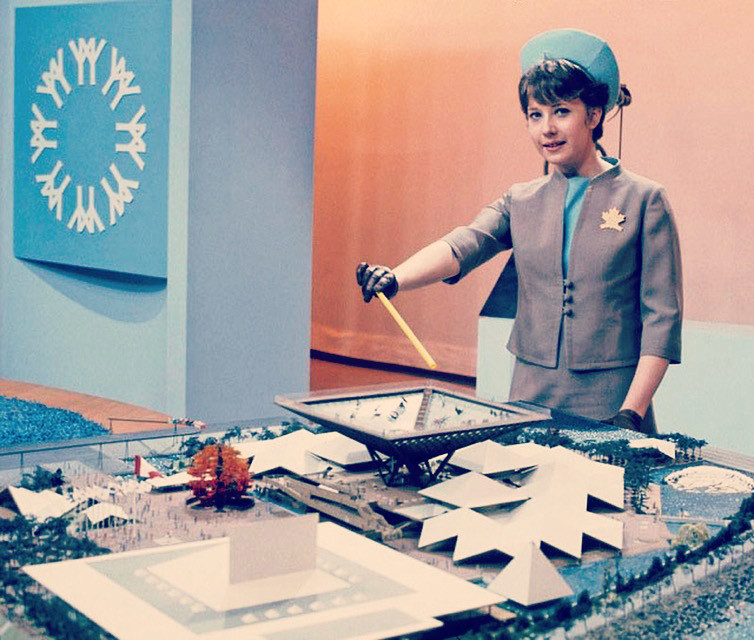
A Canadian pavilion hostess next to a scale model.
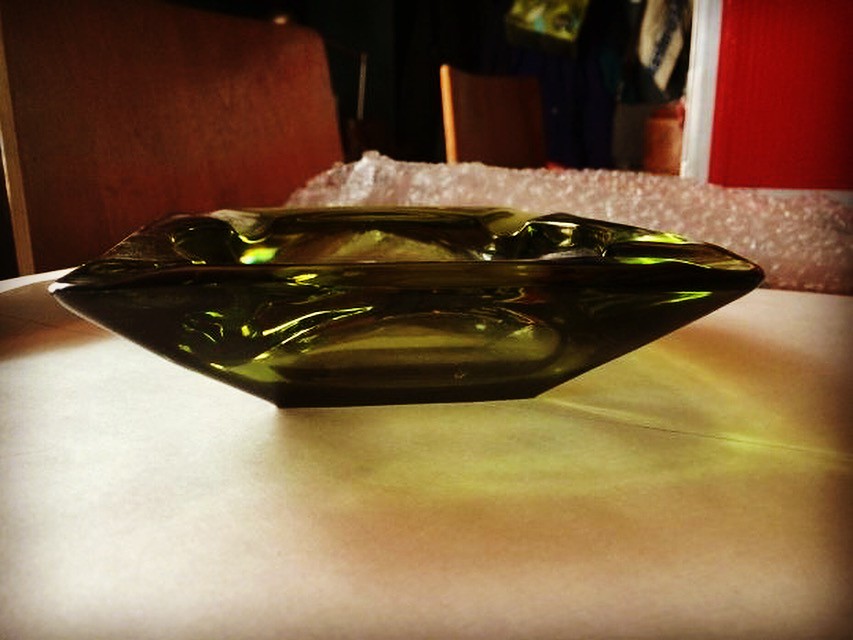
Caroline Robbie still has the infamous ashtray, tucked away in a box full of her late father's belongings.
Ladies and gentlemen, without further ado... THE ashtray:
"Do you have a light?"
And, finally, from the NFB, what it was like inside the Katimavik:
images: (1) Yvon Desjardins, via Facebook (2) Gabriel Jacob, via Facebook (3) Caroline Robbie, via cbc.ca video: excerpt of 'The Canadian Pavilion', NFB
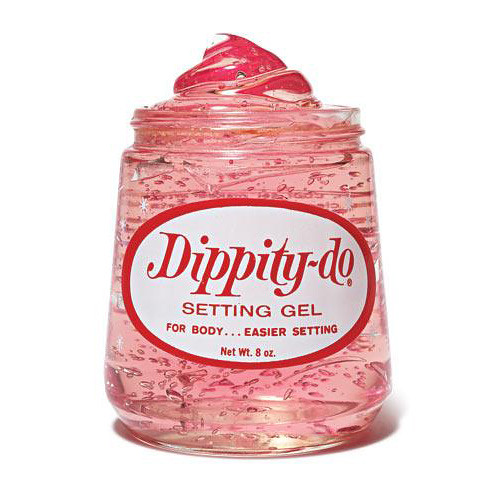
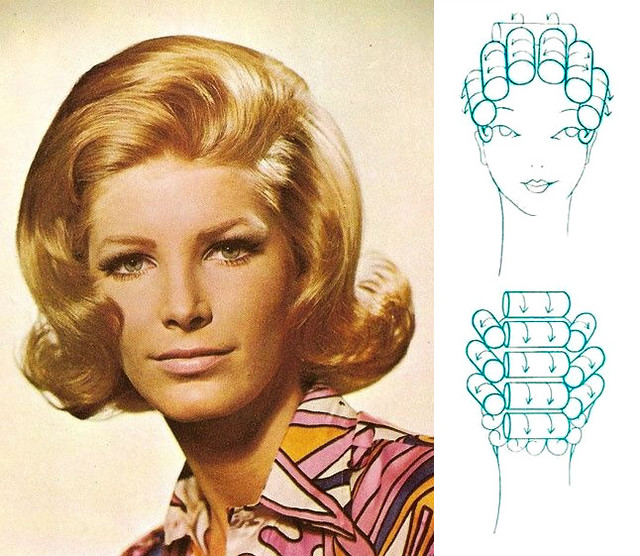
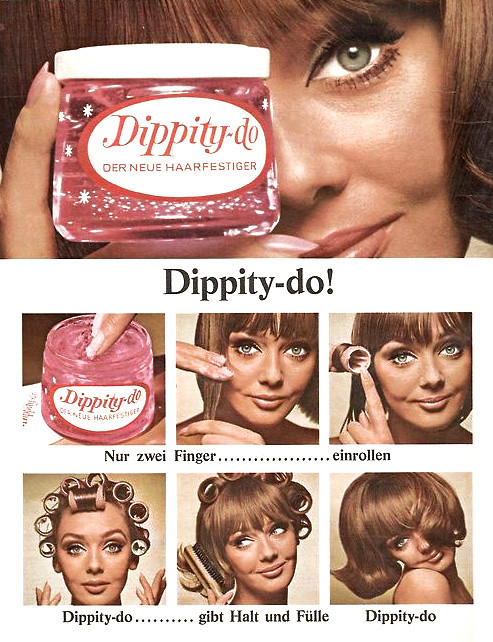
Introduced in 1965, Dippity-do hair gel was initially marketed towards women, as a setting lotion for rollers. In the days before hand-held hair dryers, setting hair on curlers was commonplace. Well into the 1970's, women relied on time-consuming roller-sets for their 'dos...
A classic flip with setting diagram, late 1960's.
Regular Dippity-do was translucent pink, while "extra-hold" was green.
The regular label read:
"After shampooing – apply to damp hair – comb through, set. Or apply to each strand as you roll. Between shampoo styling – apply each stand of dry hair as you roll; or use to smooth wild hairs, flatten bangs, etc. The Gillette Company, Personal Care Division, Chicago, Ill 60654 Made in U.S.A."
The extra-hold label read:
"This fresh, cool gel makes winding faster, easier. Hair feels clean… has body. Sets last longer. After shampooing – apply to damp hair – comb through, then set. Or – apply to each strand as you roll. Remember – a little Dippity-do gives you a lot of hold. Between shampoos – apply directly to dry hair, strand by strand as you roll. For Styling – use a tiny bit on fingertips to smooth “wild” hairs, flatten bangs, hold flip-ups, etc. The Gillette Company, Toni Division, Chicago, Ill 60654 Made in the U.S.A."
A German print ad for Dippity-do, 1960's.
It was only later on that gel gained popularity with men, reaching its apogée in the 1980's. To this day, the words "hair gel" conjure up, for many, images of spiky, wet-look hairstyles.
Below, a 1968 commercial for Dippity-do. Warning: the jingle will stay stuck in your head all day!
images: (1) photo by Jens Mortensen, via realsimple.com (2) jenbutneverjenn.com (3) thecarnabetianarmy.tumblr.com
Expo 67 was Montreal's moment of glory—arguably, one of the city's single greatest events. Expo's impact and legacy are undeniable; it's social, cultural and economical impact are recognized both locally and internationally.
While much emphasis has been put on Expo 67's extraordinary engineering, construction and architecture, less has been said about fashion. Until now.
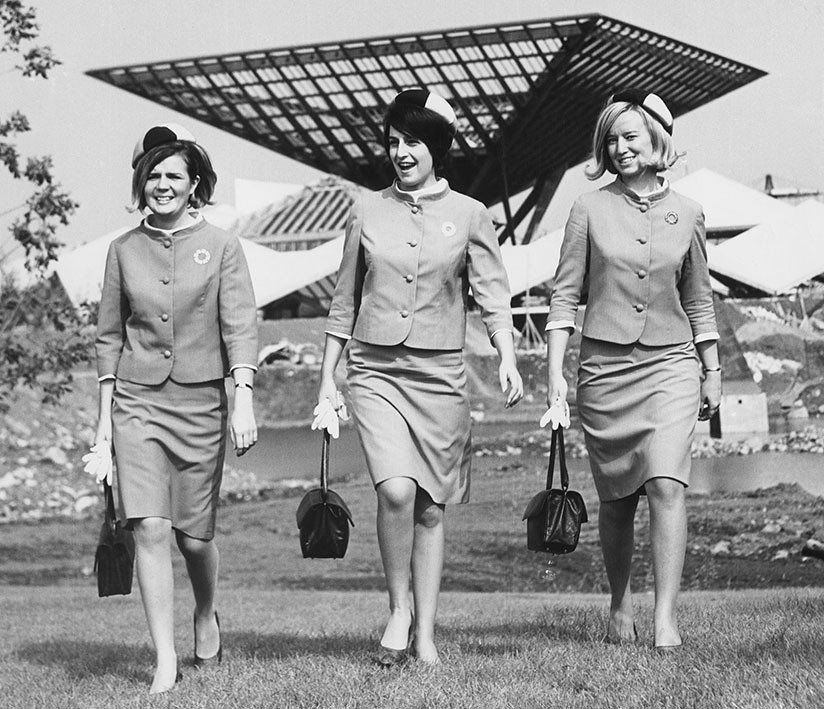
Back in 2015, I was contacted by Cynthia Cooper, head of collections and research, and curator of costume and textiles for the McCord Museum. She had been following Expo Lounge for some time, with a keen interest in the posts dedicated to fashion. She was working on an exhibit for Expo 67's 50th anniversary, which was to be an hommage to Expo and fashion... not just the hostess uniforms, but Montreal as a dynamic fashion city. I met with her in October of that year and a collaboration began.
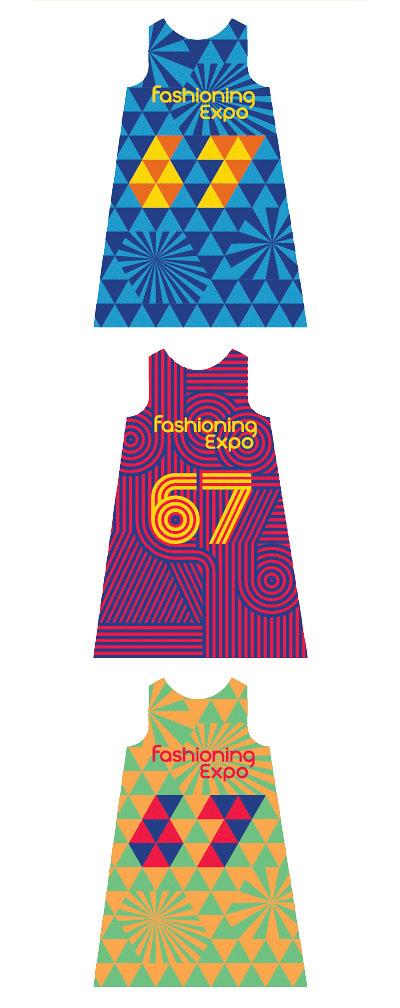
Fast forward to 2017, and the exhibit is ready to come come to life: Fashioning Expo 67 will run from March 17th to October 1, with a sneak-peek event during Montreal's Nuit Blanche on March 4th.
A description of the exhibition, from the McCord Museum website:
Embracing visual image, display, and spectacle to promote its optimistic and forward-looking world view, Expo 67 was a watershed moment for Montreal. Its modern mix of art, architecture, technology and design conveyed a message of openness and creativity that resonated with the Canadian fashion milieu. Young designers and manufacturers alike seized the opportunity to participate in multiple projects such as futuristic fashion magazine spreads shot on the site, locally designed uniforms for hostesses, and live fashion shows with roller skating models, and take advantage of this exceptional showcase to shine on a world stage.
The exhibition Fashioning Expo 67 invites visitors to enter the world of Expo 67 and experience the effervescence of Montreal’s fashion moment. The exhibition will feature over 60 outfits —hostess uniforms from various pavilions, branded clothing by Quebec designers— and products from every sector of Canadian fashion, including hats, gloves, umbrellas, purses, jewellery, and even fur.
The different sections of the exhibition will also display drawings, photographs, archival footage, and documents. In addition, there will be videos of interviews that the Museum conducted with several designers from the era.
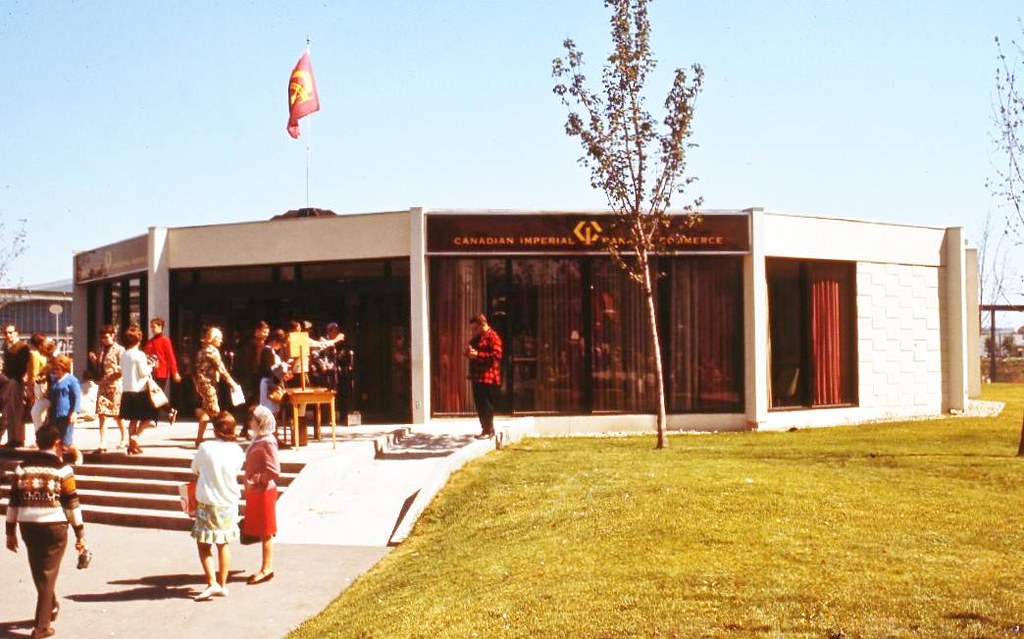
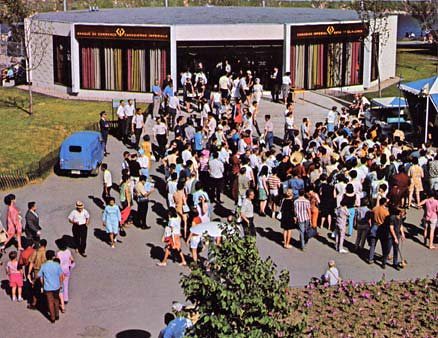
The Canadian Imperial Bank of Commerce opened on May 15, 1867 in Toronto. By 1967, both the CIBC and Canada were celebrating their centenaries.
The CIBC had an on-site branch at Expo 67. It was located on Île Sainte-Hélène, next to an Expo-Services kiosk, and a stone's throw away from Cosmos Walk. In the days before ATM machines, the branch served as many as 10,000 clients a day.
The staff, which exceeded 100, were trained to handle a variety of transactions and currencies. Hostesses who cashed traveller's cheques had the most hectic job. They stood at the front of the branch with trays of envelopes containing the cash equivalent of a $20 US traveller's cheque. In one day, they could cash as many as 4,500 cheques.
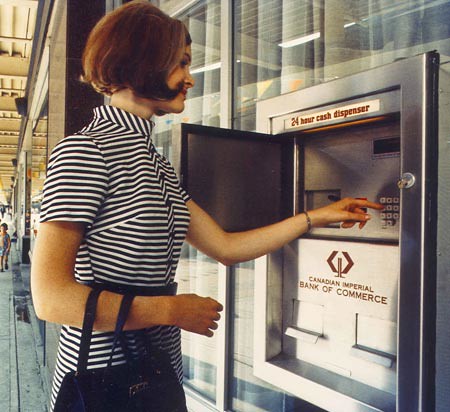
And speaking of ATM machines, the CIBC was the first Canadian bank to introduce a 24-hour cash dispenser, but that would only be in 1969...
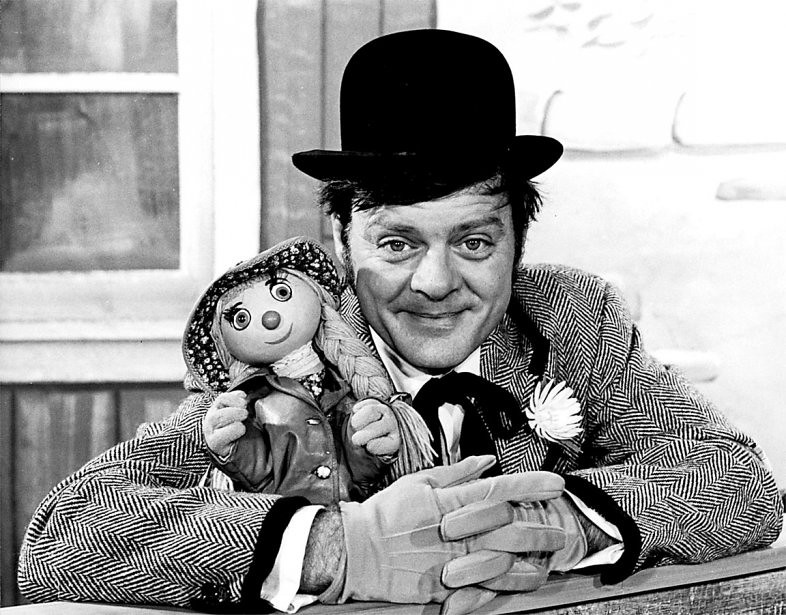
It was broadcast on Radio-Canada from 1957 to 1985. Like Mr. Dressup, the show featured interaction between its host and a puppet. Instead of Ernie Coombs' fatherly figure, Guy Sanche's "Bobino" was the older brother to his puppet counterpart, "Bobinette".
The Bobinette puppet was voiced by Paule Bayard until 1973, when Christine Lamer took over. And while Mr. Dressup had occasional puppet visitors (such as Alligator Al and Aunt Bird), Bobino's supporting characters never appeared on screen; they interacted with the cast by visual or audible cues.
On June 23, 1967, a special edition of Bobino was broadcast. Filmed on location at Expo 67, the episode accurately conveys Expo's overall ambiance. Bobino and his sister ride several rides, including the panoramic Sky Ride, as well as several kids' rides at La Ronde.
Below is the complete episode. Enjoy!
image source: lapresse.ca video source: youtube.com/user/retroquebec
Star Trek aired on NBC from September 8, 1966 to June 3, 1969.
In its initial run, Star Trek's ratings were low, and it was cancelled after 3 seasons (a total of 79 episodes). It was only several years later in broadcast syndication that the series became a hit, achieving the cult classic status it has today.
When I was a kid, reruns played Sunday mornings at 10am on CBC. I have fond memories of watching it with my mother, a bona fide trekkie.
It was difficult to narrow down, but here are my top 5 favorite episodes:
5.The Enterprise Incident
Synopsis: An undercover mission to steal a Romulan cloaking device takes the Enterprise into the Romulan neutral zone. Kirk and Spock beam over to a Romulan ship under the guise of Kirk being insane and commanding the Enterprise into the neutral zone on his own personal accord. Kirk is imprisoned while Spock catches the interest of the Romulan commander.
Why I love it: The espionnage mission, the feisty female Romulan commander, Spock getting romantic... The scenes between Spock and the commander are excellent: the intimate dinner, the subdued and almost cerebral eroticism... This episode is considered one of Star Trek's best.
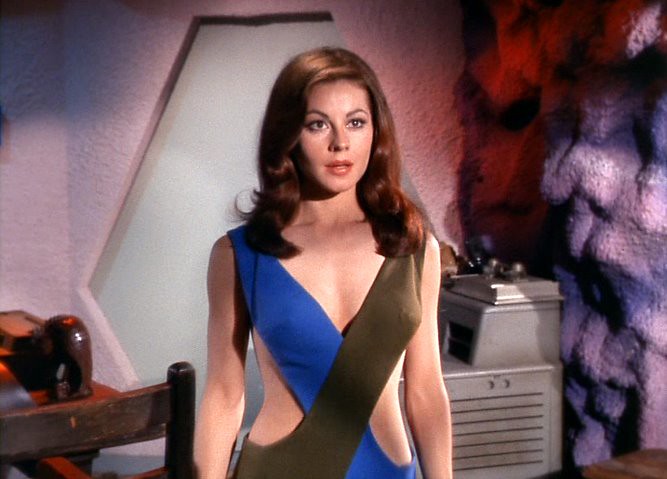
Highlights: • Kirk's overly-dramatic lash out at Spock • The commander's swanky quarters and bizarre food • Her outfit when she "transforms [herself] into a woman" • Spock's hilariously long-winded "Romulan Right of Statement"
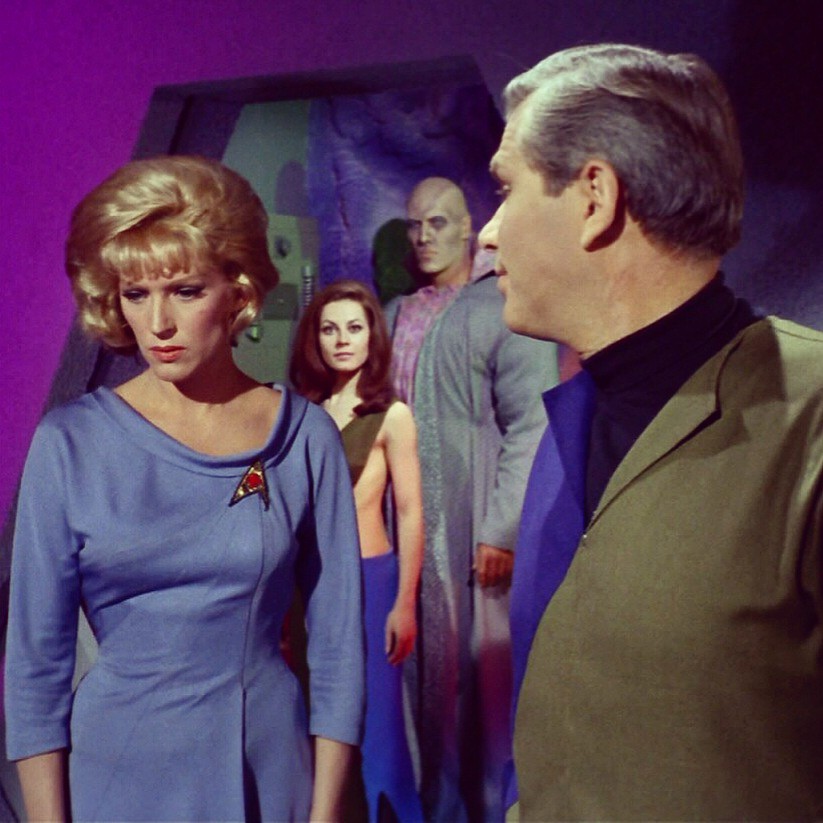
4. What Are Little Girls Made Of?
Synopsis: Nurse Christine Chapel is reunited with her fiancé Dr. Roger Korby, a brilliant scientist who has "perfected" the ability to create android copies of human beings. Korby hopes to replace humanity with these superior, emotionless androids in the interest of removing dangerous emotions from society. Kirk does not agree with this.
Why I love it: This episode is classic vintage sci-fi camp. I've always loved Nurse Chapel, and this is one of the only Star Trek episodes where she is a central character. I love the underlying debate of the android storyline: Would a society stripped of all emotion actually be better...?
Highlights: • Andrea and her criss-cross costume • The spinning "android duplicator" • Captain Kirk's obscenely shaped stalactite • When Ruk gets hit by a phaser beam
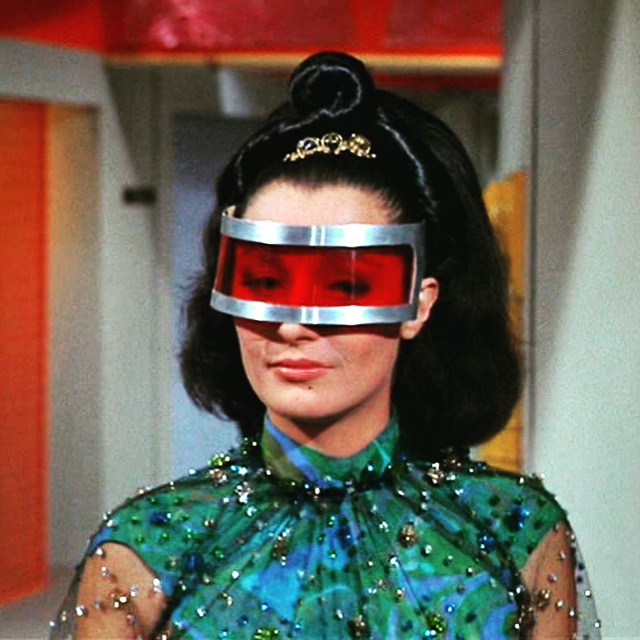
3.Is there In Truth No Beauty?
Synopsis: A beautiful woman escorts an alien ambassador so hideously ugly that the sight of him can drive a human insane. When the Enterprise is thrown off-course by a madman, Spock must mind-meld with the alien to bring them home.
Why I love it: I've always loved bottle Star Trek episodes, and this particular one is bursting with color and style. The idea of Kollos the ambassador as a noncorporeal being is intriguing. I also love the irony that Miranda, a woman considered so beautiful, turns out to be blind—literally and figuratively.
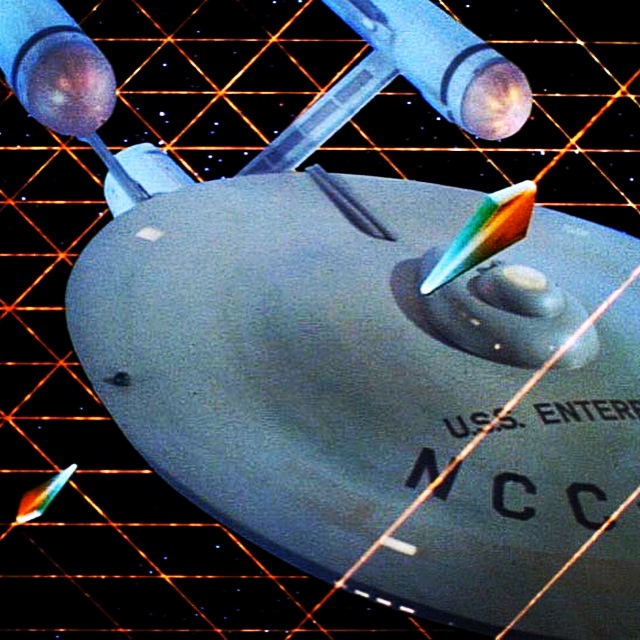
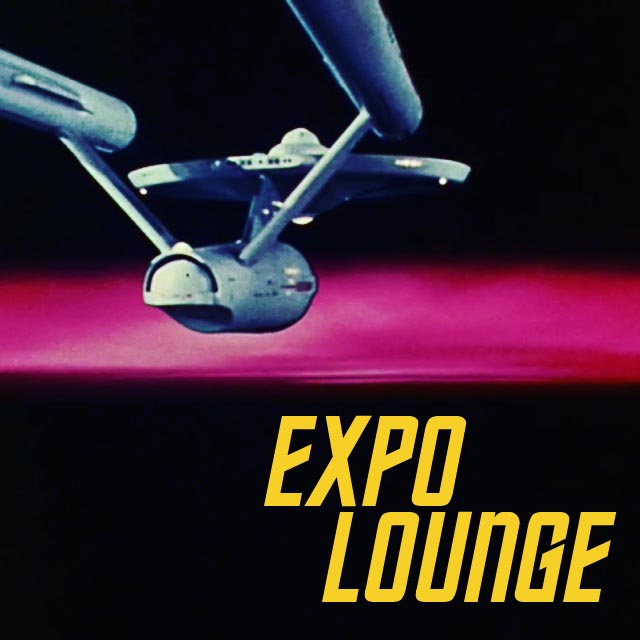
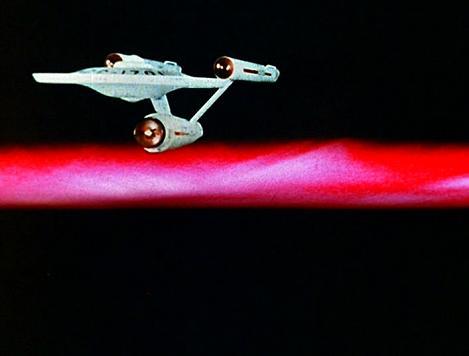
Highlights: • Kollos: the light effects used to create him and the visor needed to look at him • The dinner, where Kirk and McCoy drool over Miranda • Her "sensor web" dress • The Enterprise being propelled through the (pink) "galactic barrier"
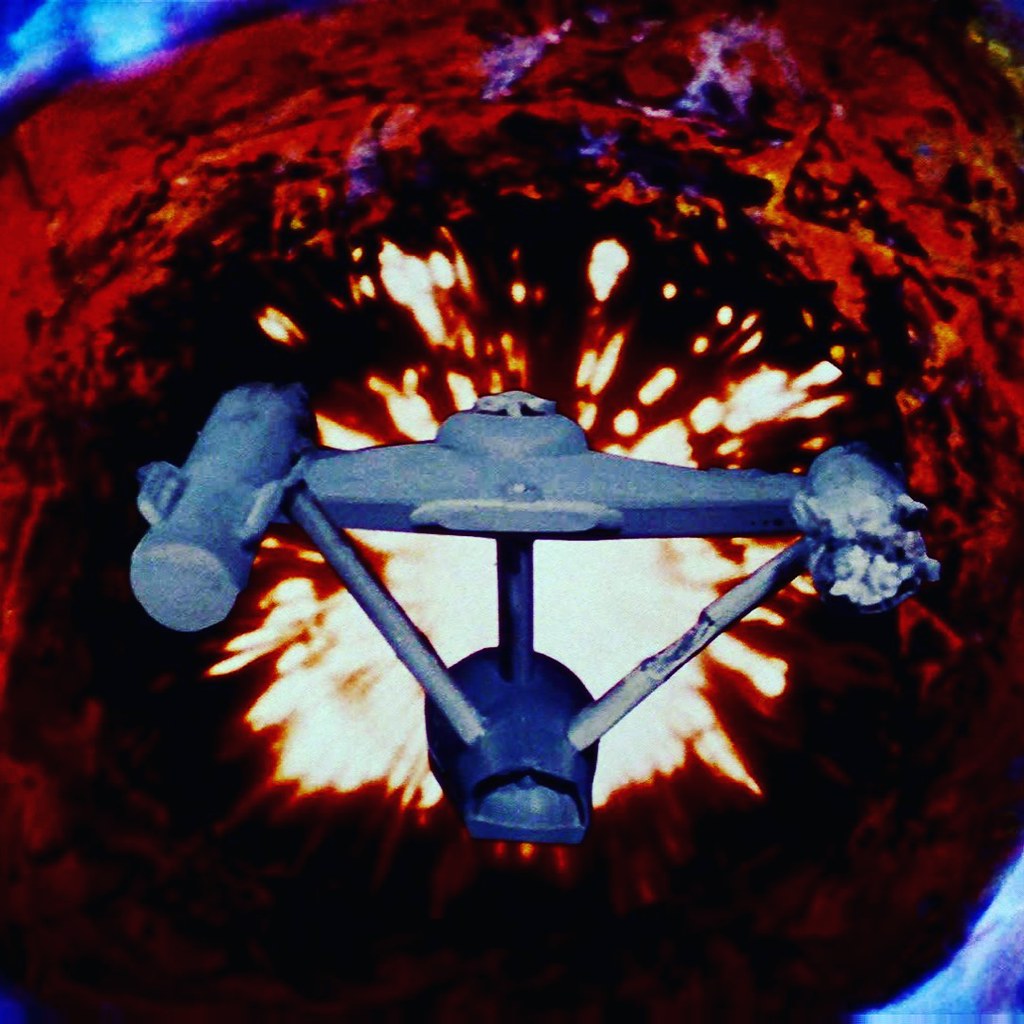
2.The Doomsday Machine
Synopsis: The Enterprise discovers a weapon capable of destroying entire planets, and a commodore whose crew was killed by the machine jeopardizes the crew on a crazed mission of revenge.
Why I love it: Bold and suspenseful, this is one of the episodes I vividly remember as a kid. Kirk and Spock have an intricate rapport during this episode, even though they are on seperate ships most of the time. The moment where the un-hinged Commodore Decker is relieved of command is greatly satisfying.
Highlights: • The Doomsday Machine itself (and music that makes it seem so threatening) • The love-to-hate Commodore Decker • The ineffective phasers bouncing off the planet-killer's "neutronium" hull • Kirk's plea to be beamed aboard the Enterprise (and him barely making it back)
1.The Tholian Web
Synopsis: When the Enterprise investigates the disappearance of another starship, the crew loses Kirk in a dimensional interphase and must deal with a hostile alien race while trying to recover him.
Why I love it: To me, this is one of the most visually appealing episodes. Though most of Star Trek's adventures take place on "Class-M" planets, this was the only episode to use spacesuits—and that, despite the show's budget constraints. Kirk is presumed dead most of the episode, and it's interesting to see how the crew go on without their captain (including Spock and McCoy's conflict, and Uhura's meltdown). The use of the first-person perspective and unique camera effects adds to the episode's allure.
Highlights: • The Tholian ships spinning their forcefield "web" • Those campy spacesuits! • Tholian commander Loskene • Kirk's ghostly apparitions • Chekov going mad
images: (1 and 7) montage by author (2) io9.gizmodo.com (3) memory-beta.wikia.com (4) tos.trekcore.com (5) trekmovie.com (6) flickr.com/photos/birdofthegalaxy
episode synopses:
adapted from 'jammersreviews.com' and 'memory-alpha.wikia.com'
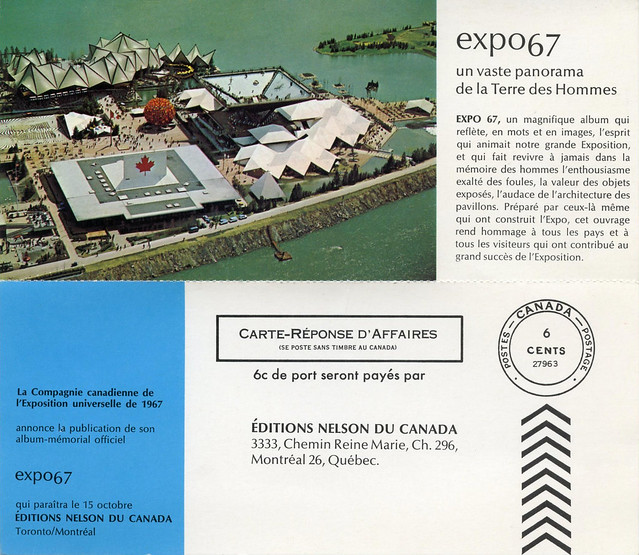
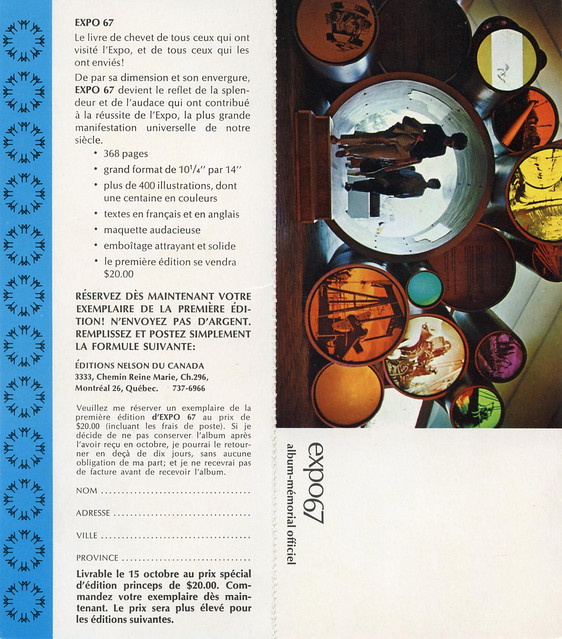
One of the most magnificent books on Expo 67 ever made has to be the hefty Official Memorial Album. Packed with photos and beautifully-written articles, the book remains, to this day, a sought-after addition to any Expo 67 afficionado's collection. I've seen bidding wars on eBay, with the final price going for well-over 100$...
At the time of its release, the album could be pre-ordered for 20$, which included shipping (it's over 8 lbs — I weighed it!). The 6¢ postage-paid order card pictured here invited interested parties to reserve their copy, without sending money, with 10 days after delivery for returns.
Interesting to note, the book was published in 1968, and the card here states October 15th as its release date...
"The bedside book for those who visited Expo, and those who envy them!" image source unknown
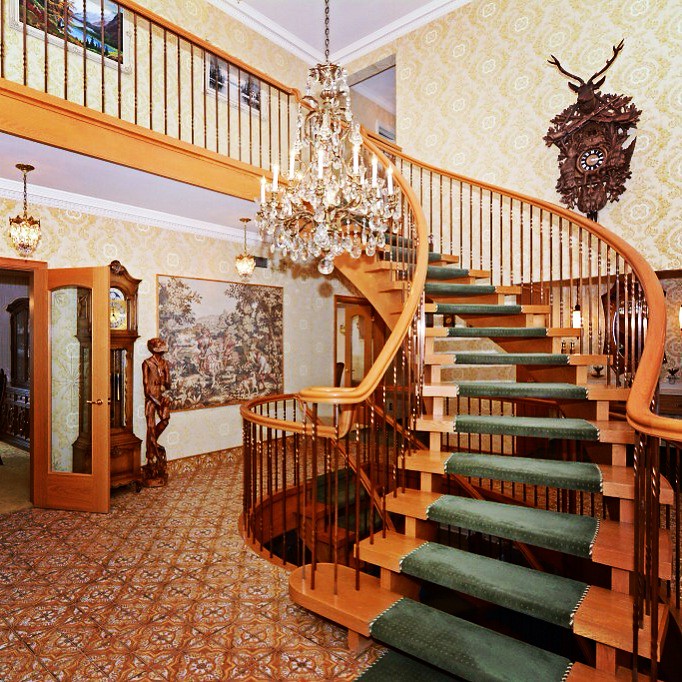
The gorgeous main hallway with stunning staircase.
When my grandparents immigrated to Canada in the early 1950's, two of my grandfather's siblings were already here: a brother in Montreal, and a sister in Toronto. This Toronto sister had a daughter, and the daughter got married in 1950.
In the late 1960's, the couple acquired a Volkswagen dealership. In 1970, they had a gorgeous 2-level home built in the prestigious Thornhill neighborhood of Markham (just north of Toronto).
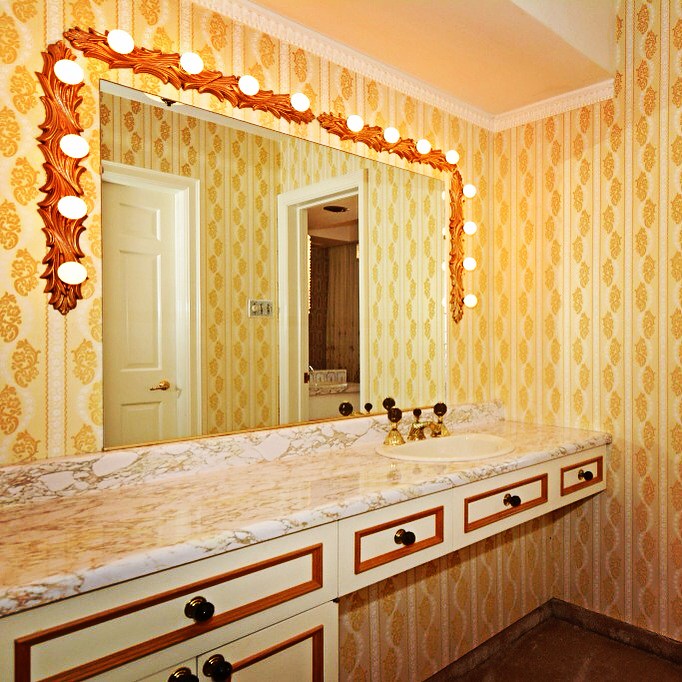
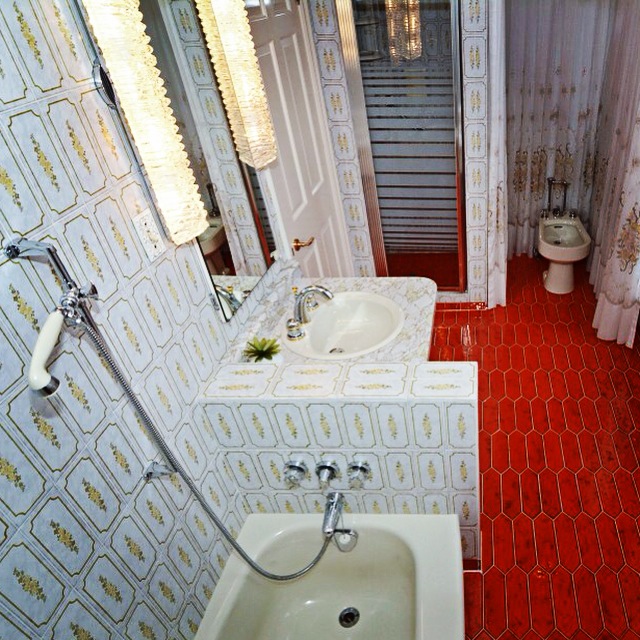
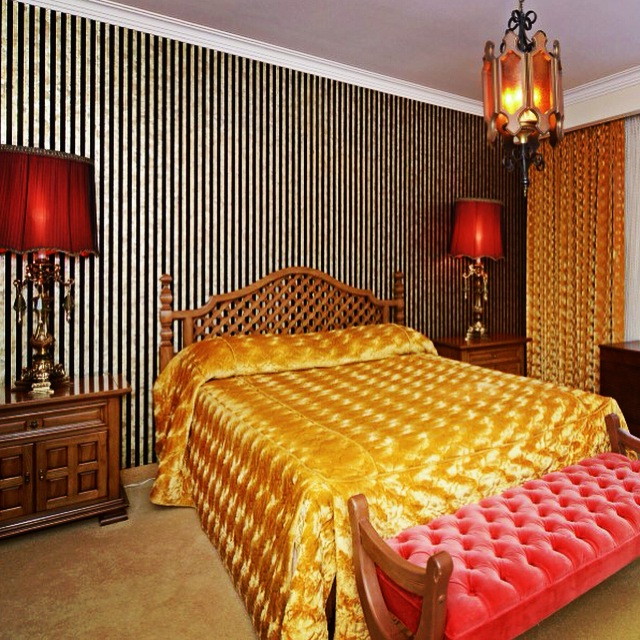
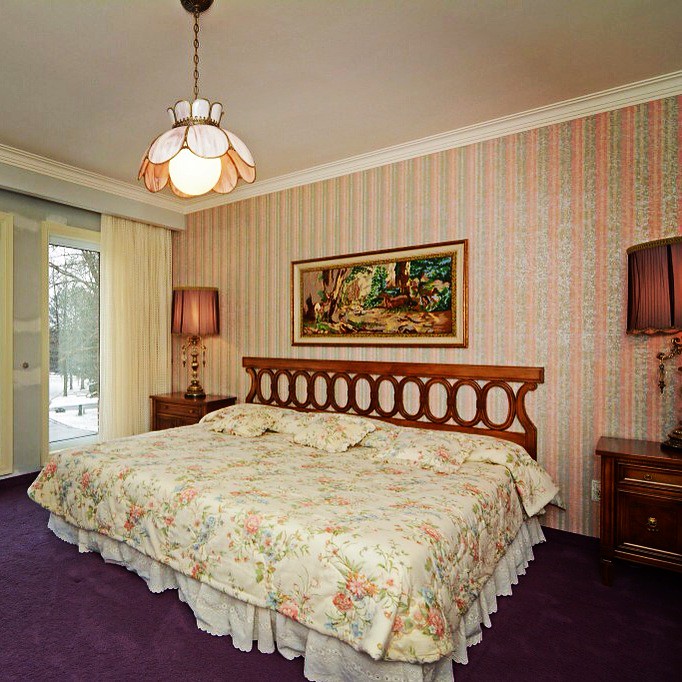
Fast-forward 46 years and the impeccably cared-for house has been sold. Pretty much untouched décor-wise, the house is pure vintage eye candy: carpet, wallpaper and chandeliers galore!
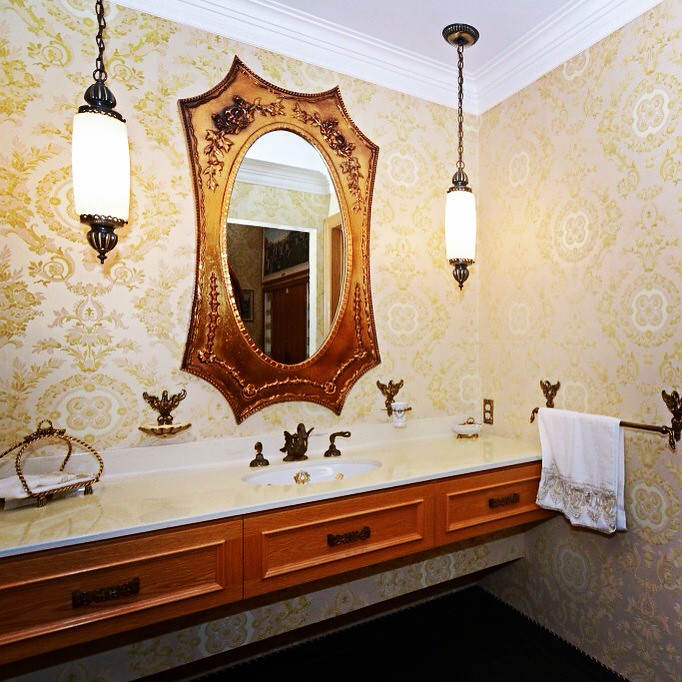
A powder room, just off the main foyer.
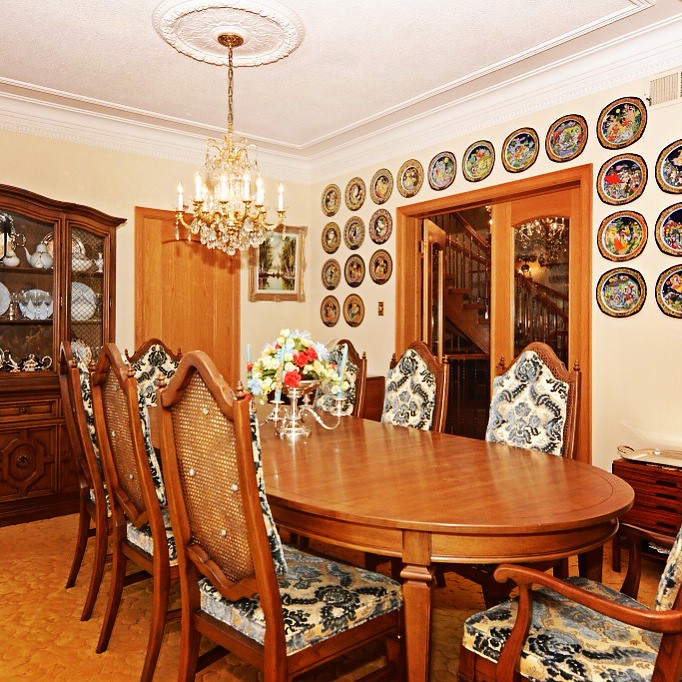
The formal dining room.
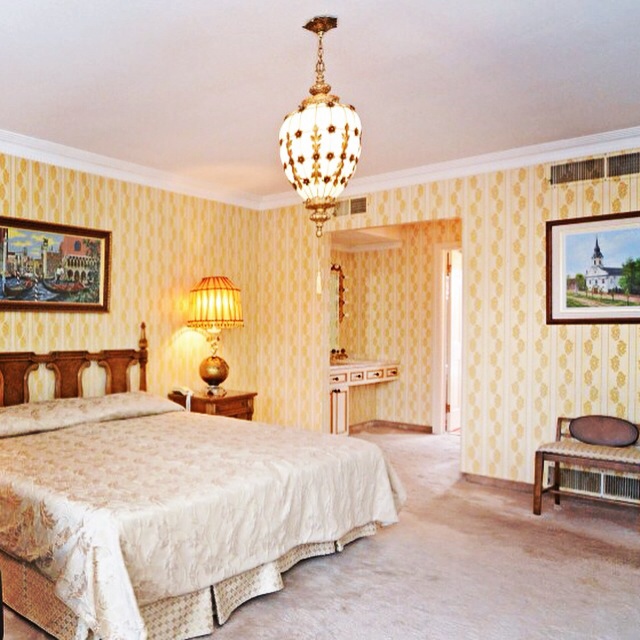
The master bedroom...
... with adjoining "makeup area"
... and ensuite bathroom!
Sumptuous bedrooms... 5 in total.
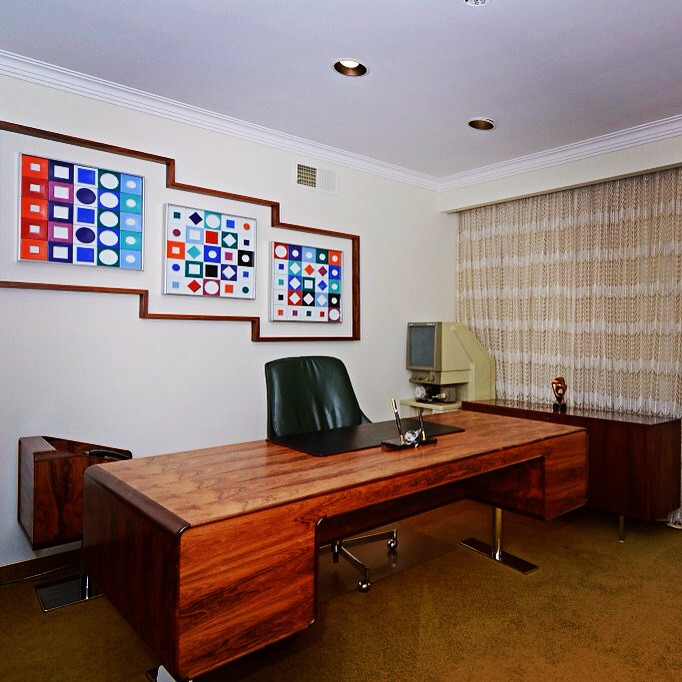
One of the bedrooms was made into an office (worthy of Don Draper...!)
I remember staying at the house on a family trip to Toronto when I was a kid. I was fascinated: it was the late 1980's, and the décor already felt like it was from another era... Yet it was all strangely familiar to me: like my grandmother's house, but on a much grander scale.
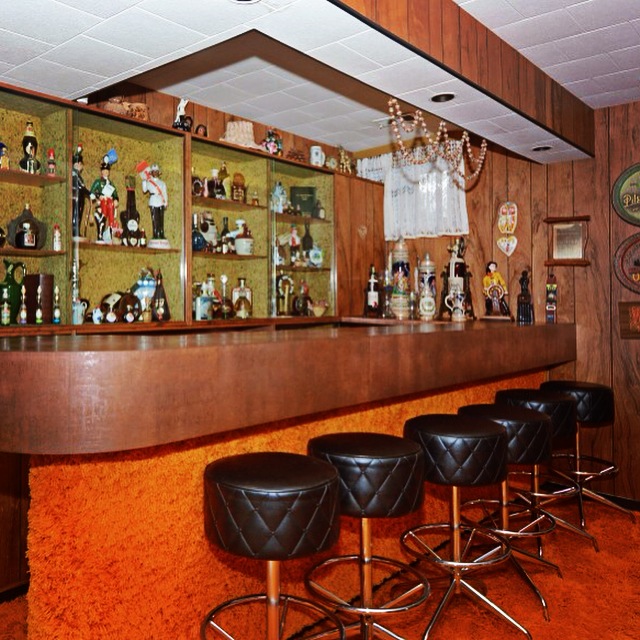
Check out the orange shag carpet going up the basement bar! Imagine the parties!
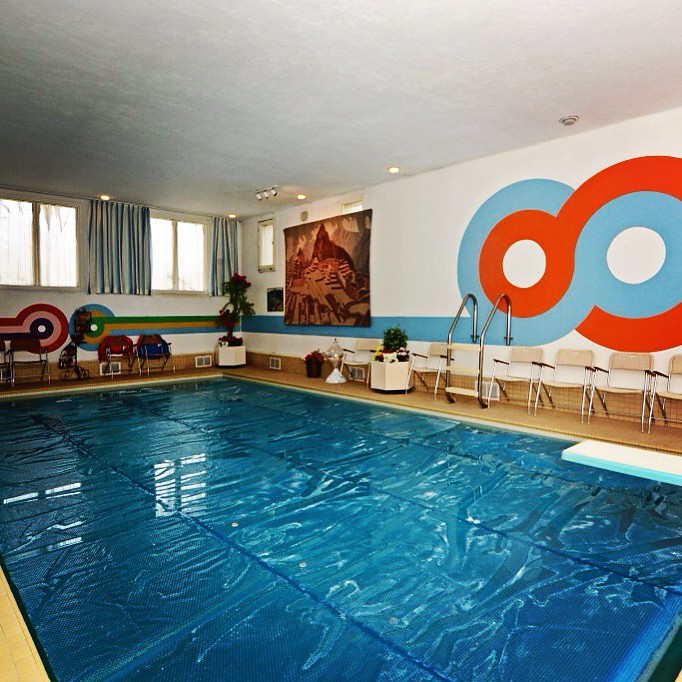
I was completely in awe of the groovy basement bar and swanky indoor pool. The 1960's sound system had a reel-to-reel tape deck! And, oh, the pool... Imagine my childhood delight of being able to go swimming in the dead of winter! I remember the pool area having changing rooms and a sauna. I even remember sun-tanning lamps, which I was warned not to try.
Uncle Joe explained to me that the pool had to be built first, into the foundation, before the rest of the house was built over it...
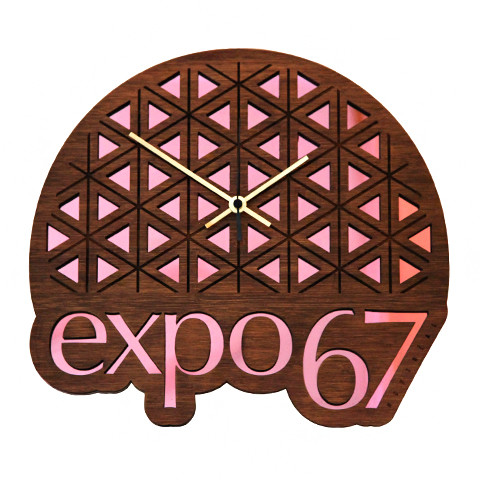
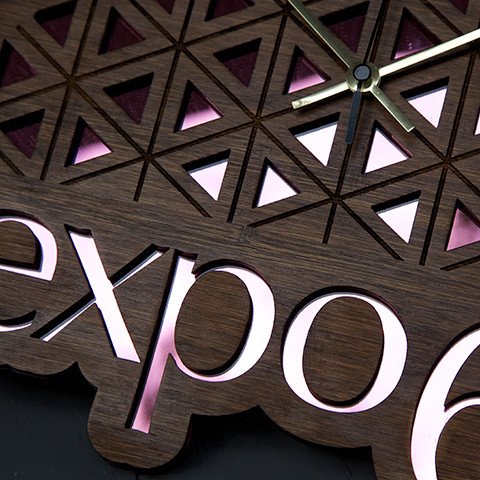
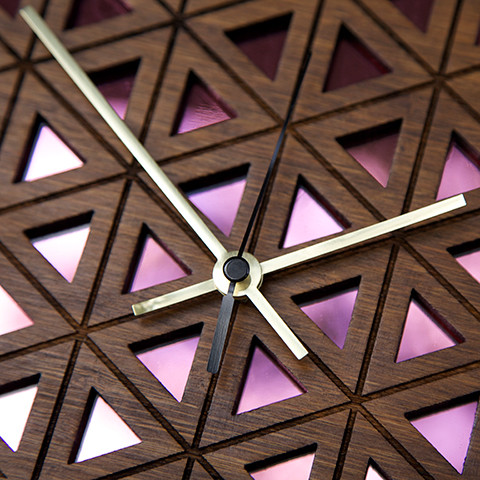
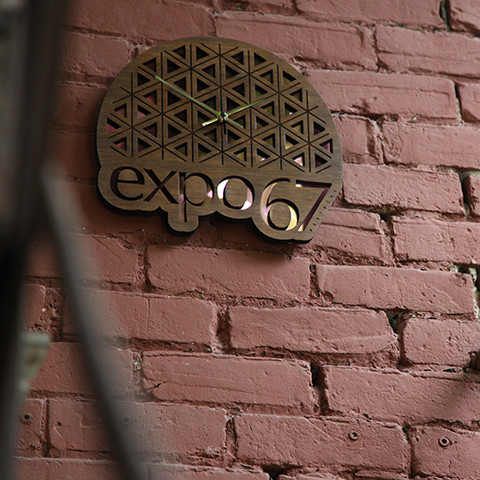
From Main and Local, check out this hand-crafted work of art, meant to "[take] you back in time to the glory days of Montreal."
Laser cut, eco-friendly bamboo is sanded and oiled for a slick, polished finish, while the mirrored acrylic lining pays hommage to the original translucent covering of Buckminster Fuller's 1967 dome.
Available here in 2 colors. And for once, the battery is included...